
Power and wages
The CMA looks at concentration in labour markets

If you have followed the discussion of competition policy taking place in recent years two of the most interesting elements within it are common ownership and monopsony.
I’ve written previously about common ownership, so I won’t cover that again, except to note that the issue appears in both the risk analysis of at least one large asset manager and, more importantly, in lots of regulatory authorities’ thinking.
So let’s turn to monopsony. This is another form of market power that derives from concentration but whereas a monopoly, or more likely an oligopoly, affects what price the firm can sell at it, monopsony affects what price they can buy at. I suspect when most people think about monopsony (even if they haven’t heard the term) they will be be drawn to examples like the power supermarkets have over suppliers (food, yes, but also garments). They probably won’t be thinking about it in positive terms either.
But something else firms buy is, of course, labour. If an organisation is dominant in a particular labour market (regional, sectoral, etc) it may have significant ability to determine the price paid for labour, better known as wages. The more concentrated the market, the more power. This will be potentially offset by labour’s own ability to increase bargaining power through union representation.
So far, so theoretical. Therefore it was interesting to see the Competition and Markets Authority recently release a report on just this topic: Competition and market power in UK labour markets
It really is fascinating and well worth a read. Some quick snips below from the exec summary. First, on the plus side:
(a) Overall, labour market concentration in the UK has been roughly constant or declining between 1998 and 2023. This finding holds regardless of the data source and labour market definition.
(b) Consistent with this finding, the wage markdown (the difference between a worker’s contribution to revenue and their wage, a direct measure of employer market power) has also been constant or declining between 2008 and 2021, in contrast to the US. This suggests that if anything UK workers receive a slightly higher share of their contribution to output than fifteen years ago.
But…
(e) Geographically, labour markets are much more concentrated outside London and the South East. This means that for a given occupation, fewer businesses account for a larger share of jobs within an area most people consider their relevant job market, a so-called Travel to Work Area (TTWA). Differences between TTWAs have not shrunk over time. If anything, some rural labour markets have become more concentrated.
and
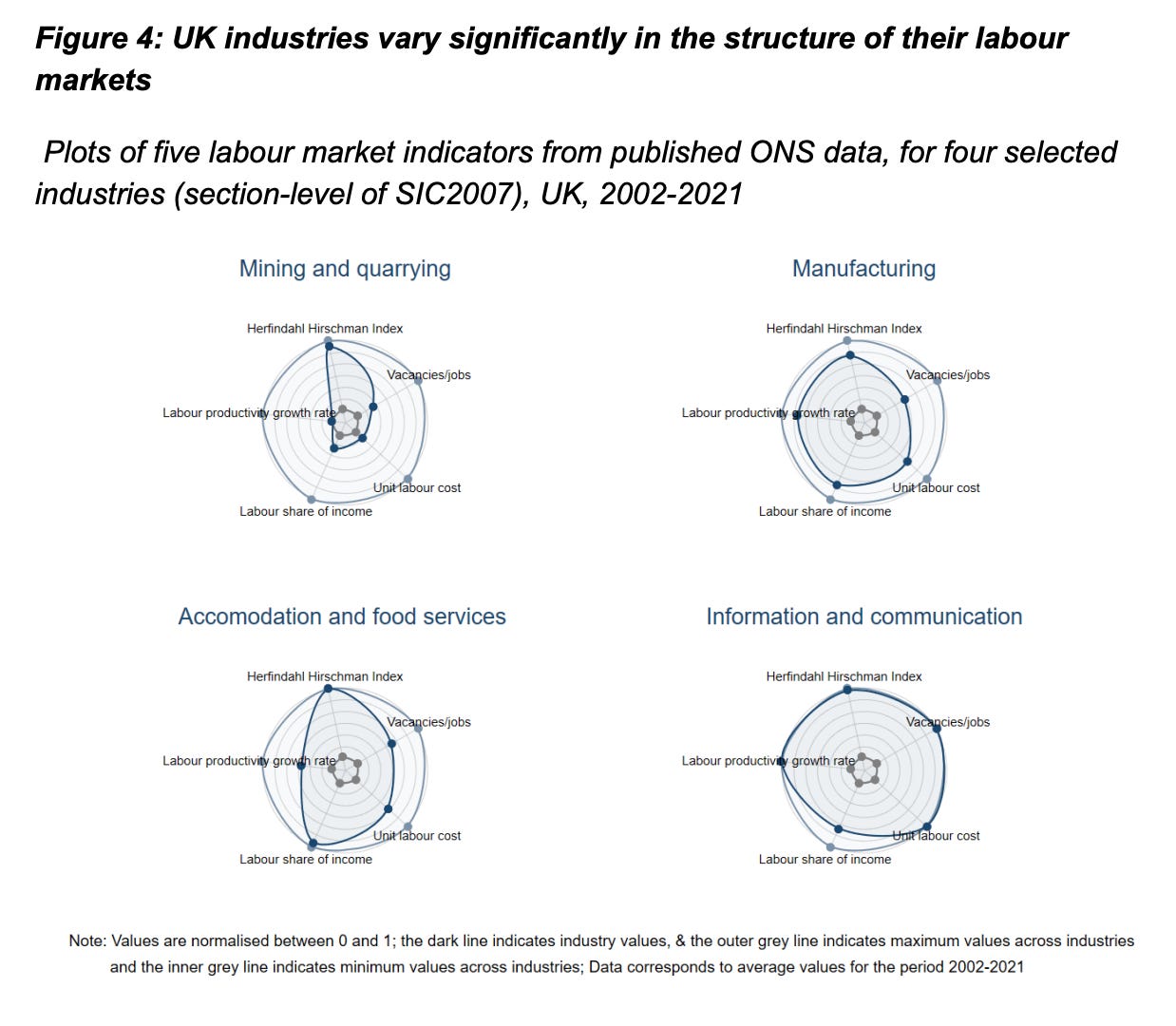
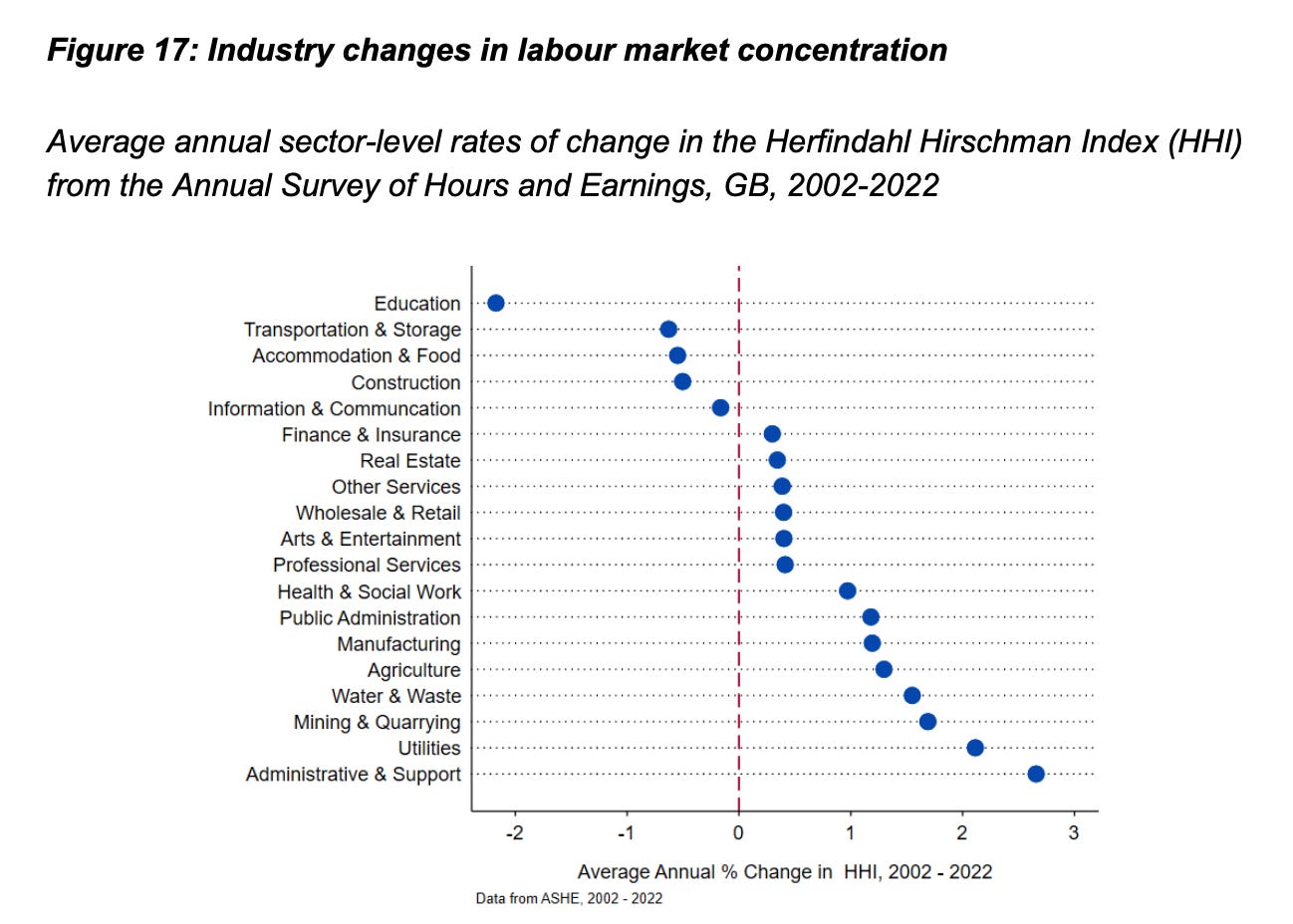
(g) There is substantial industry variation in labour market concentration. Manufacturing, transport and storage and financial services are particularly concentrated.
There are some nice graphics on sectoral differences & changes.
The CMA identifies concentration does affect wages, unless workers have bargaining power of their own:
In relation to employer market power and labour market outcomes, we find: (a) For comparable workers working in comparable firms, a move from a market with many employers (in the least concentrated 10% of labour markets) to a highly concentrated labour market with few employers (in the most concentrated 10% of labour markets) is associated with a roughly 10% decrease in a worker’s wage.
(b) However, for workers covered by collective bargaining agreements, this negative relationship between labour market concentration and their wage effectively disappears.
There is a section in the report that goes into greater detail on this. As I’ve noted before, if workers have representation in concentrated markets that can potentially be a good thing for them.
And something on one of my own hobby horses - performance-related pay
(m) Performance-related pay (as opposed to standardised pay) is associated with higher average wages, and more unequal wages within a firm. Wages are not only higher at the upper end of the within-firm wage distribution, but also lower at the lower end.
(n) For firms with union representation, however, the difference in wage inequality between performance pay and standardised pay disappears
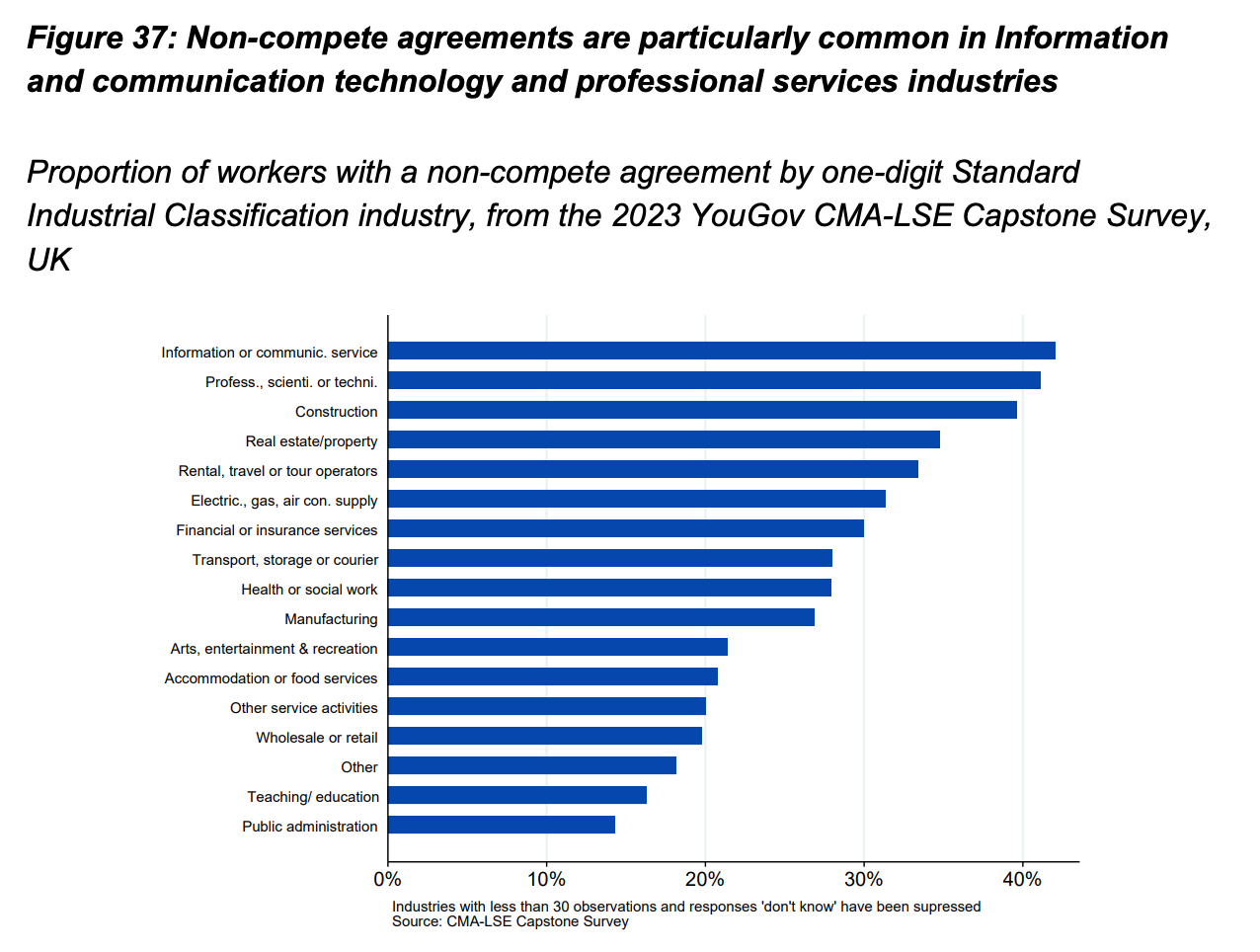
Finally, even though I know it’s been a hot topic lately, I hadn’t looked into non-compete clauses in contracts in the UK. I’m surprised they are as common as they are, though I wonder how binding they are / how often they are enforced. Again some interesting sectoral differences here.
The finding that market concentration is higher outside of London and the South East, and in more sparsely populated areas, is important, if perhaps not surprising.
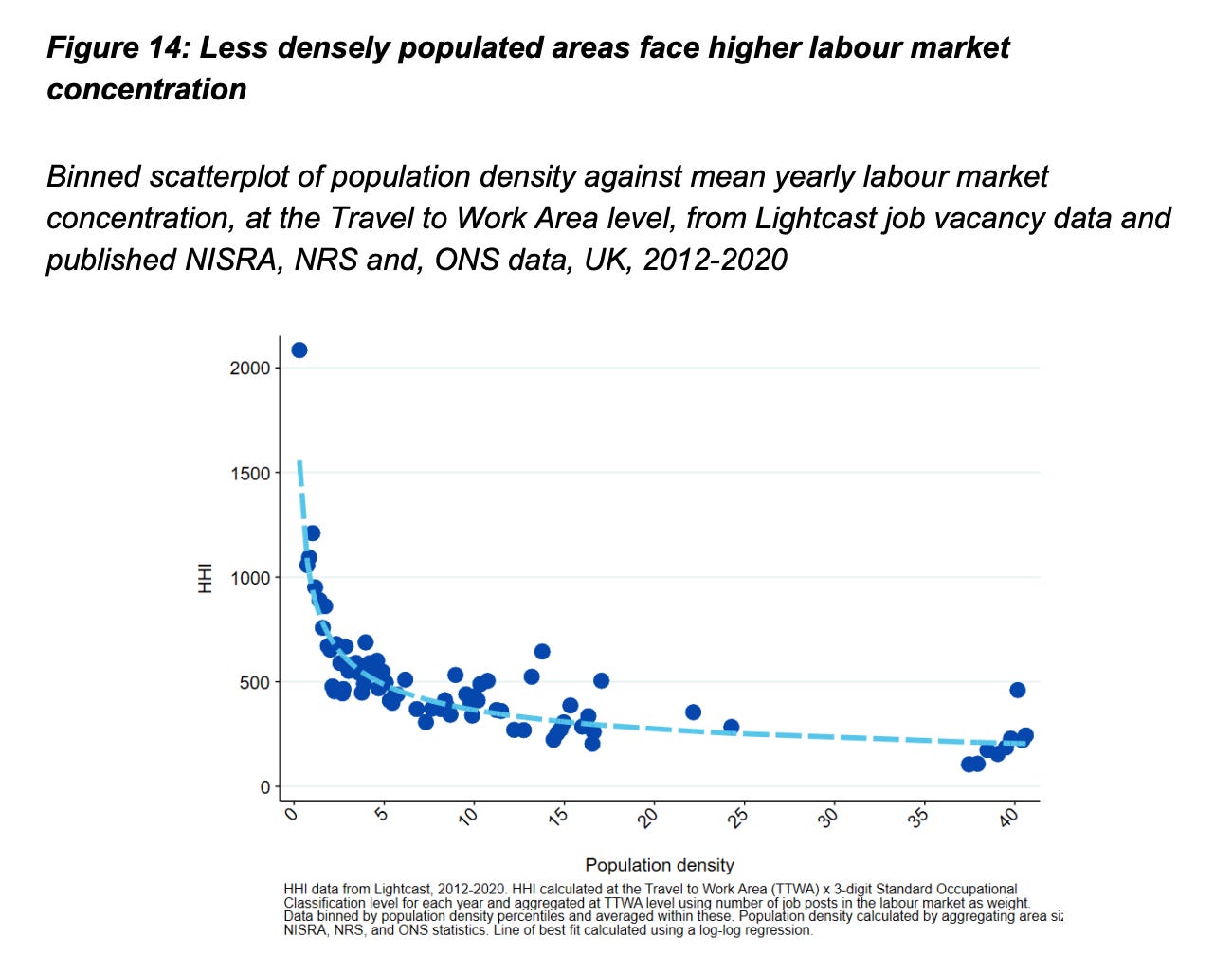
If a large employer develops a site outside a major population centre I think it is likely that regulatory and other oversight is weaker because monitoring resources will be smaller. Developing a site in such an area likely increases the firm’s political power as local politicians will not want to risk losing that investment. And, to the current topic, it also gives the organisation significant power to determine wage rates, if few other employment options are available.
There was an interesting piece of reporting by the Bureau of Investigative Journalism on Amazon a couple of years back that included a look at job adverts by local authority area. Over the period analysed in a number of areas Amazon accounted for a significant number of both warehouse job vacancies and vacancies in general.
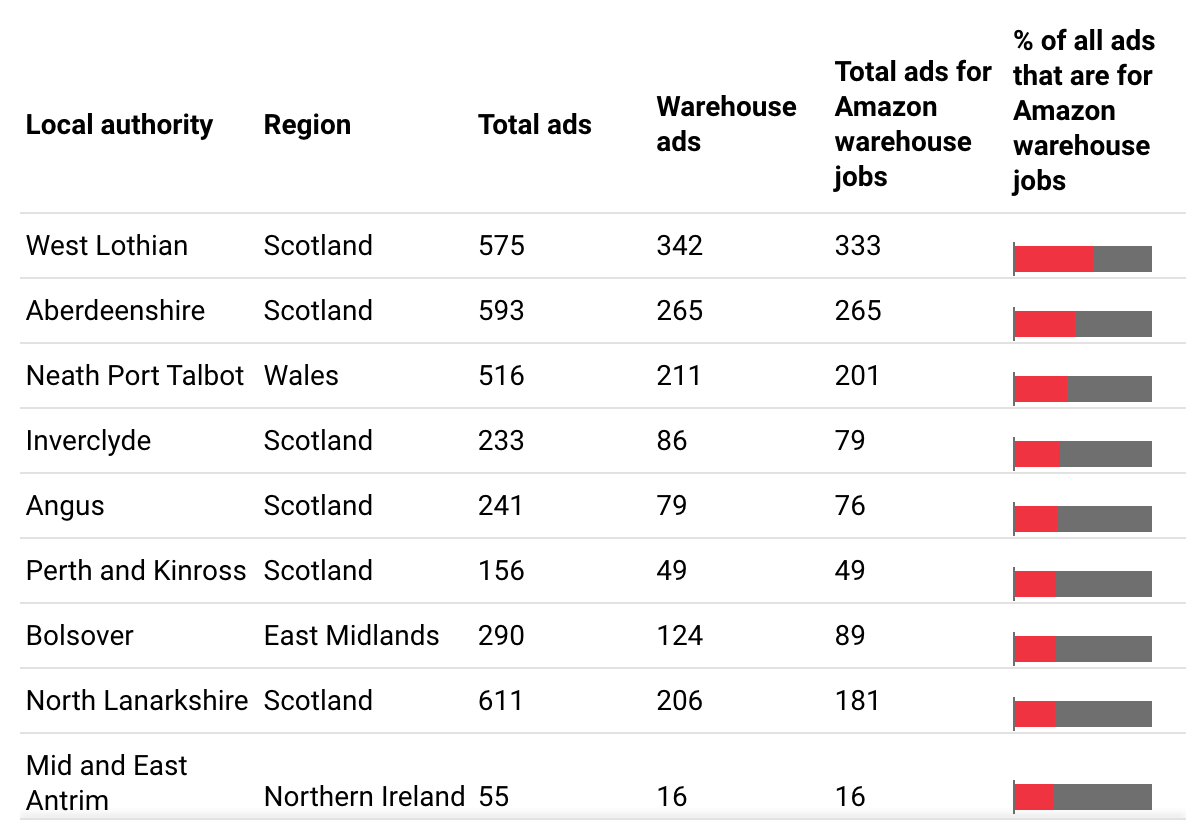
The CMA analysis shows that union representation can offset employer power to determine wages where there is labour market concentration. But Amazon workers rather famously largely do not work in sites where a union is recognise.
I think market concentration is a fascinating issue to look at, but a really difficult one for investors. I first heard the term ‘pricing power’ being used positively in an asset manager presentation when I was a trustee a very long time ago, but it took me far too long to realise what I was really being told about the companies that have it. During the recent high inflation spike I’ve found it jarring to read those ‘the top 10 stocks with pricing power’ type pieces. I know pricing power is not synonymous with ‘rinsing power’ but these days the term always makes my ears prick up. And I think it’s very important to remember that the power in question can apply in labour markets too. So this is a very helpful report all round.
PS. This has been a lively topic competition policy in the US, see here, here and here for example. Will the UK follow suit?