
Phantom fixed income
ETF lending snippets


I bow to no-one in my professional admiration of BlackRock’s ability to squeeze every drop of revenue out of asset management. But even I was impressed by the level of stock-lending undertaken by one ETF - the iShares $ Treasury Bond 20+yr UCITS ETF. According to the fund’s key facts blurb, in the year to end June 2025, on average 90.37% by AUM of the fund’s holdings were out on loan. And the maximum on loan during that period was… chuckle… 99.42%.
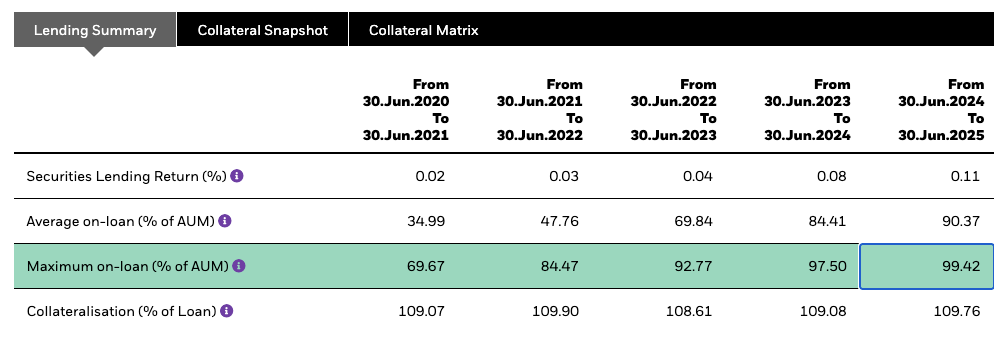
Both the average an the maximum out on loan have increased significantly over the past five years, with well over two-thirds on loan on average over the past three.
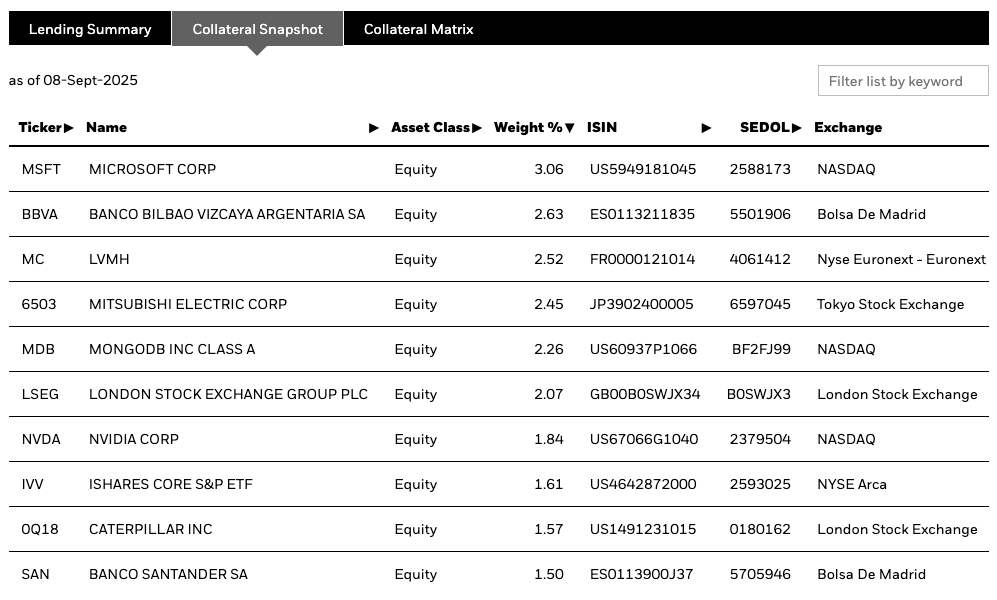
So if the underlying bonds are rarely there, what does this US bond ETF hold in collateral? A load of equity from all over the place. Here’s a snapshot of top collateral holdings this week.
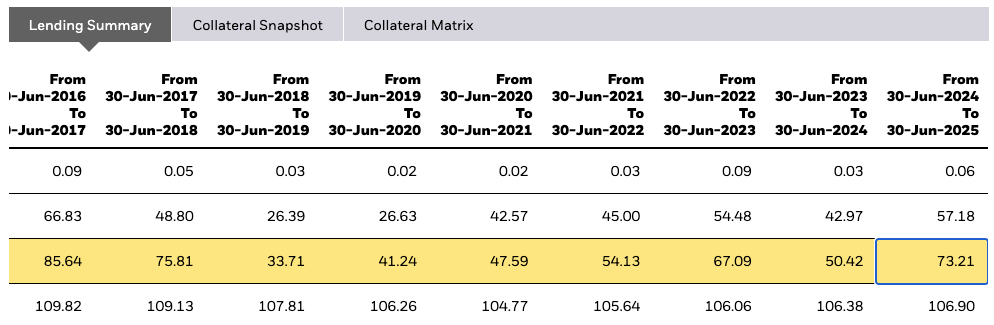
I thought it would be interesting to have a look at the holdings in UK gilt ETF in comparison, so here’s the iShares Core € Govt Bond UCITS ETF. Maximum on loan as a % of AUM is the highlighted row, the row above that is the average on loan as % of AUM during the same period. Not quite as impressive as the US fund, but almost three quarters on loan at the high point in the year to end June, and well over half out on loan on average during the period.
And similarly there’s a lot of equity as collateral from across the globe.

BlackRock takes a bit over a third of the income from lending according to the blurb, so the clients are getting revenue:
Funds participating in securities lending retain 62.5% of the income, while BlackRock receives 37.5% of the income and covers all the operational costs resulting from securities lending transactions.
But it feels a bit weird that as some points these funds don’t hold anything like what an outsider might expect.